NC DUI vs DWI: What's the Actual Difference (and Why It Matters)
You've heard the terms DUI and DWI thrown around, and maybe you're wondering if they're the same thing, especially if you're facing a charge in North Carolina. It's a common question, and honestly, the language can get confusing because people use them interchangeably. But when it comes to North Carolina law, there's a specific term that matters. Understanding the actual NC DUI vs DWI difference is the first step in knowing what you're up against, and why it's so important for your case.
Key Takeaways
- North Carolina officially consolidated DUI and DWI into a single offense called Driving While Impaired (DWI) back in 1983, though the term DUI is still used in everyday conversation.
- While state roads use DWI, federal property or military installations in North Carolina might involve DUI charges under federal law.
- Impairment for DWI charges isn't limited to alcohol; prescription drugs, recreational drugs, and even certain medical conditions can lead to a DWI charge if they affect your ability to drive.
- North Carolina has a six-level sentencing structure for DWI, with penalties significantly influenced by aggravating and mitigating factors present in the case.
- Consequences of a DWI conviction extend beyond court penalties, often leading to substantial increases in auto insurance premiums and potential employment difficulties, especially for commercial drivers.
Understanding The Core NC DUI vs DWI Difference
It’s common to hear people talk about DUIs, especially when discussing drunk driving. You might have heard the terms DUI and DWI used interchangeably, and honestly, that’s understandable. Many people, and even some media outlets, still use “DUI” regularly. However, when you’re actually facing charges here in North Carolina, the official charge you’ll see is Driving While Impaired, or DWI. There isn't a separate charge called DUI in North Carolina state law anymore.
The Official NC Charge: Driving While Impaired (DWI)
Back in 1983, North Carolina passed the Safe Roads Act. This legislation merged what were previously separate offenses, including Driving Under the Influence (DUI) and Driving While Impaired (DWI), into a single charge: DWI. So, if you are pulled over on a state road in North Carolina for operating a vehicle while impaired by alcohol or drugs, you will be charged under N.C. Gen. Stat. § 20-138.1, which specifically addresses Driving While Impaired.
Why The Term DUI Persists In Common Language
Even though the official legal term is DWI, the term DUI stuck around in everyday conversation. Think of it like saying you’re going to “tape” a TV show, even though most people record it digitally now. Language evolves, but old habits die hard. Because other states still use DUI, and it’s been used for so long, people continue to use it. It’s not incorrect to say DUI when you’re talking generally about impaired driving, but it’s important to know that North Carolina law specifically uses the term DWI for its charges.
The 1983 Safe Roads Act: Merging DUI and DWI
The Safe Roads Act of 1983 was a significant piece of legislation that aimed to standardize and strengthen laws related to impaired driving. Before this act, there might have been distinctions or separate charges for different types of impairment. However, the act consolidated these offenses under the umbrella of DWI. This means that whether the impairment was due to alcohol or drugs, or whether the specific wording was “under the influence” or “impaired,” the charge became DWI. This unification simplified the legal framework for impaired driving offenses in the state.
North Carolina law officially recognizes only one charge for impaired driving: DWI. While the term DUI is still widely used in common language and by other states, it does not represent a distinct legal charge within North Carolina's state statutes.
When DUI Charges Might Still Apply In North Carolina
You might hear the terms DUI and DWI used interchangeably, and for the most part, in North Carolina, they refer to the same thing: Driving While Impaired. The state officially adopted the term DWI back in 1983 with the Safe Roads Act, merging the old DUI charge into the current DWI statute. So, on most state roads, you'll be facing a DWI charge if you're caught driving impaired.
Federal Property And Military Installations
However, there's a specific situation where you might actually see a DUI charge: when the offense occurs on federal property. This includes places like military bases or national parks within North Carolina. On these grounds, federal law applies, and the terminology used is often "DUI." While federal courts can sometimes adopt state laws, the prosecution happens under federal statutes. This means the rules, procedures, and penalties can differ significantly from a standard state DWI case.
Distinguishing State vs. Federal Jurisdiction
Understanding the difference in jurisdiction is key. If you're pulled over on a state highway, you're under North Carolina's DWI laws. If the stop happens on a military installation or other federal land, you're subject to federal law, which may use the term DUI. This distinction isn't just about the name of the charge; it affects which court handles the case and the specific laws that will be applied. It's a critical detail when building a defense strategy, as the legal landscape changes depending on whether you're in state or federal jurisdiction.
The location of the alleged offense is a primary factor in determining whether you face state DWI charges or federal DUI charges. This jurisdictional difference can significantly impact the legal process and potential outcomes.
Impairment Beyond Alcohol: What DWI Encompasses
Prescription and Recreational Drugs as Impairing Substances
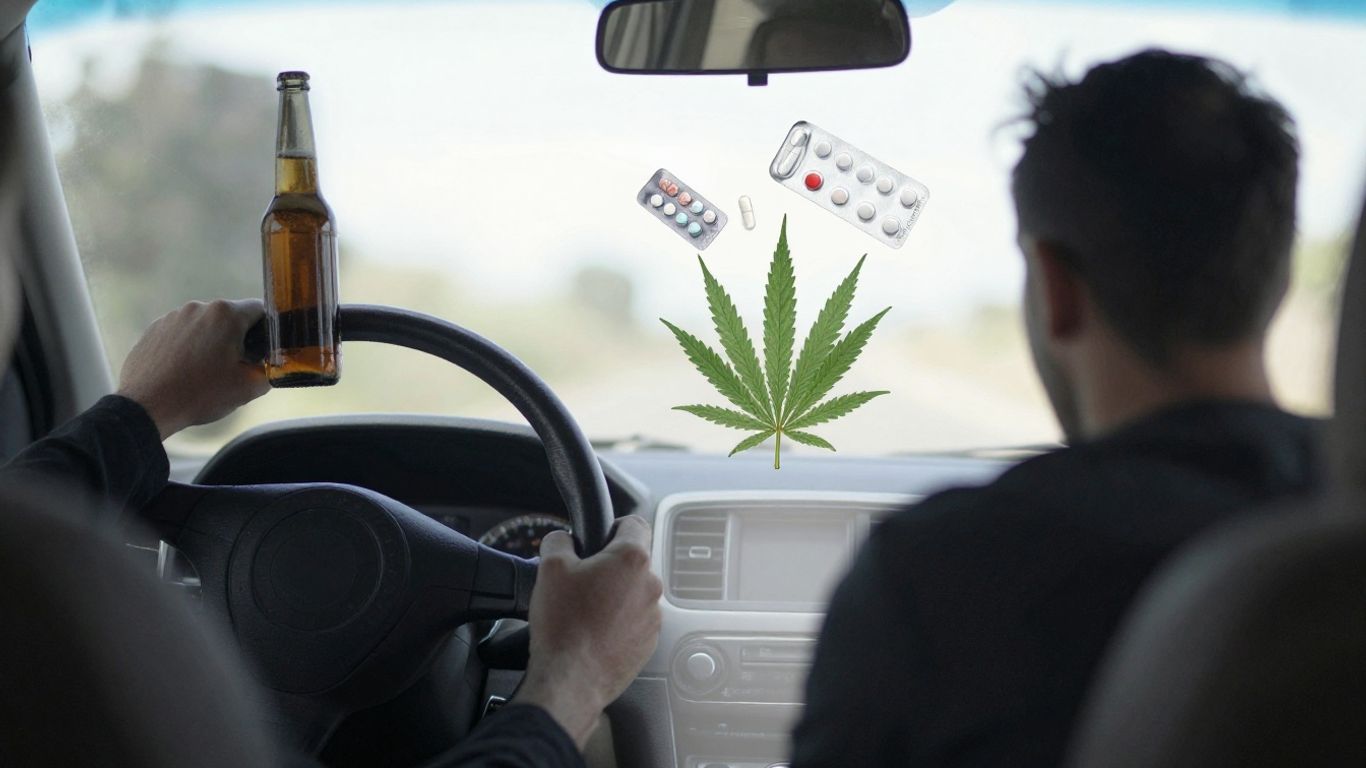
When you hear about DWI, your mind probably goes straight to alcohol. But North Carolina law is broader than that. You can be charged with DWI if you're impaired by substances other than alcohol. This includes prescription medications, over-the-counter drugs, and illegal substances. The key is whether these substances affect your physical or mental faculties to the point where you can't drive safely. It doesn't matter if the drug was prescribed to you; if it impairs your driving, it's a problem.
Proving Impairment Without a Breathalyzer Reading
Not every DWI case involves a breathalyzer or blood test. Sometimes, the state has to prove impairment based on other evidence. This can include the officer's observations of your behavior, performance on field sobriety tests, and any admissions you might have made. Even if your blood alcohol concentration (BAC) is below the legal limit, you can still be convicted of DWI if the state shows your faculties were appreciably impaired by any substance. This is especially relevant in cases involving drugs, where standard BAC tests don't apply.
The Legal Definition of Appreciable Impairment
North Carolina law defines impaired driving as operating a vehicle when your physical or mental faculties are "appreciably impaired" by an impairing substance. This means your ability to drive safely is noticeably affected. It's not about being completely unable to drive, but rather that your judgment, reaction time, coordination, or perception is diminished to a degree that makes driving unsafe. The state must demonstrate this impairment, and it's a central point in any DWI defense. Factors that can be considered mitigating, potentially lessening the severity of a charge, include:
- Slight impairment solely from alcohol, with a BAC not exceeding 0.09.
- Driving that was safe and lawful, aside from the impairment.
- A clean driving record with no serious offenses in the past five years.
- Impairment primarily caused by a lawfully prescribed medication taken as directed.
- Voluntary participation in substance abuse treatment after being charged.
The law recognizes that impairment isn't just about alcohol. If any substance, whether legal or illegal, prescription or recreational, affects your ability to operate a vehicle safely, you can face DWI charges. This broad definition means you need to be cautious about how medications affect you before getting behind the wheel.
Aggravating factors, which can increase the seriousness of the offense, include:
- Gross impairment or a BAC of 0.16 or higher.
- Especially reckless or dangerous driving.
- Negligent driving that caused an accident.
- Driving with a revoked license.
- Having a child under 18 in the vehicle.
Navigating North Carolina's DWI Sentencing Structure
When you're facing a DWI charge in North Carolina, the judge doesn't just pull a penalty out of thin air. There's a structured system in place, and it's based on a few key things: the specifics of your case and what the law calls "factors." These factors are basically circumstances that can make your situation more or less serious in the eyes of the court. The state uses six different levels of punishment, ranging from Level 5 (the least severe) all the way up to Aggravated Level 1 (the most severe).
The Six Levels Of DWI Sentencing
The judge will look at what are called "grossly aggravating factors," "aggravating factors," and "mitigating factors" to decide where your case falls. Think of grossly aggravating factors as the big deal-breakers. Having one of these, like causing serious injury to someone else or having a child under 16 in the car with you, automatically pushes your case into a higher sentencing level. Prior DWI convictions within a certain timeframe also count as grossly aggravating.
Aggravating factors are less severe than grossly aggravating ones but still make the offense worse. Mitigating factors, on the other hand, can help your case. These might include things like having no prior convictions or showing that you were driving safely before the impairment was detected. The judge weighs all these factors to determine the final sentencing level.
Here's a general breakdown of the levels:
- Aggravated Level 1: This is the most serious. It's typically imposed when there are two or more grossly aggravating factors. Penalties can include a significant fine and a mandatory jail sentence of 12 to 36 months, with no possibility of parole.
- Level 1: Imposed with one grossly aggravating factor. This level carries a mandatory minimum jail sentence of 30 days and a maximum of 24 months, along with a fine up to $4,000. The minimum jail time cannot be suspended.
- Level 2: This level applies when there's one aggravating factor and no grossly aggravating factors, or when mitigating and aggravating factors are equal. It involves a mandatory minimum jail sentence of seven days (up to one year) and a fine up to $2,000. The minimum jail time cannot be suspended.
- Level 3: This level is assigned when aggravating and mitigating factors are considered equal. It carries a minimum jail sentence of 72 hours (up to six months) and a fine up to $1,000. The judge can suspend the jail sentence.
- Level 4: This level is for cases where mitigating factors outweigh aggravating factors. It includes a minimum jail sentence of 48 hours (up to 120 days) and a fine up to $500. The jail sentence can be suspended.
- Level 5: This is the least severe level, typically for first-time offenders with no aggravating factors and only mitigating factors present. It involves a minimum jail sentence of 24 hours (up to 60 days) and a fine up to $200. The jail sentence can be suspended.
Understanding Aggravating And Mitigating Factors
It's important to know what these factors are. Grossly aggravating factors are serious. They include things like:
- A prior DWI conviction within the last seven years.
- Driving with a revoked license due to a prior DWI.
- Causing serious injury to another person.
- Having a child under 16 in the vehicle.
Aggravating factors, while less severe, still increase the seriousness of the offense. Mitigating factors can lessen the severity. These might include:
- No prior convictions.
- The driver's impairment was slight.
- The driver has a safe driving record.
- The driver has completed a substance abuse assessment and is following recommendations.
How Sentencing Levels Impact Penalties
The sentencing level directly dictates the penalties you face. This includes the length of your jail sentence (and whether it's mandatory or can be suspended), the amount of your fine, and the length of your driver's license revocation. For example, a Level 1 conviction means a mandatory jail time that cannot be avoided, while a Level 5 might only result in a short jail sentence that can be suspended, along with a smaller fine. The higher the sentencing level, the more severe the consequences will be.
Understanding these levels and factors is key to building your defense. The prosecution will try to establish aggravating factors, while your attorney will work to highlight mitigating circumstances or challenge the existence of any aggravating factors altogether. The outcome of your case hinges significantly on how these factors are presented and interpreted by the judge.
Even a lower-level DWI conviction carries significant penalties, including a mandatory license revocation of at least one year. For commercial drivers, the rules are even stricter, and a conviction can have immediate and devastating career impacts. If you're facing a DWI charge, it's vital to consult with an attorney who understands North Carolina's DWI laws and can help you navigate this complex sentencing structure.
Consequences Of A DWI Conviction
License Revocation and Suspension
A DWI conviction in North Carolina means your driver's license will be suspended. The length of this suspension depends on several factors, including whether it's your first offense or if you have prior convictions. For a first offense, you might face a suspension of 30 days to 1 year. Repeat offenders can expect much longer periods, potentially leading to lifetime revocation in cases of habitual impaired driving.
The Impact On Auto Insurance Premiums
Your auto insurance company will be notified of a DWI conviction. This is a significant red flag for them, indicating you're a higher risk driver. As a result, you can expect your insurance premiums to increase substantially, often doubling or even tripling. This increased cost can last for several years, typically three to five at a minimum. In some cases, an insurer might drop your coverage altogether, forcing you to seek high-risk insurance, which comes with its own set of complications and higher costs, often requiring an SR-22 certificate.
Potential Employment Ramifications
A DWI conviction can affect your job prospects and current employment. Many employers conduct background checks, and a DWI on your record can be a barrier to getting hired, especially for positions that require driving or involve sensitive responsibilities. If your job requires a commercial driver's license (CDL), a DWI conviction can lead to immediate disqualification and loss of your CDL. Even if your job doesn't directly involve driving, some employers may view a DWI as a sign of poor judgment or unreliability, impacting your career advancement.
Specific DWI Rules For Underage Drivers

North Carolina's Zero Tolerance Policy Explained
In North Carolina, if you're under 21, the rules about drinking and driving are stricter. It's called a "Zero Tolerance" policy. This means that if you have any alcohol in your system while driving, you're breaking the law. We're not talking about being drunk here; we're talking about any measurable amount of alcohol. This is a separate offense from a standard DWI, specifically covered under N.C. Gen. Stat. § 20-138.3. The legal limit for drivers 21 and older is 0.08% BAC, but for those under 21, the limit is effectively 0.00%.
Penalties For Underage Consumption And Driving
If you're under 21 and caught driving with any alcohol in your system (BAC above 0.00% but below 0.08%), you face specific penalties. For a first offense, this typically means a 30-day license revocation. You'll also likely face fines, which can range from $200 to $500, or potentially up to $1,000, plus court costs and possible attorney fees. This offense will also go on your driving record. Subsequent offenses within a certain timeframe will result in increased penalties.
How Zero Tolerance Intersects With Standard DWI Charges
It's important to understand that the Zero Tolerance law doesn't replace the standard DWI laws. If a driver under 21 has a Blood Alcohol Concentration (BAC) of 0.08% or higher, they can be charged with both the underage "driving after consuming" offense (under G.S. 20-138.3) and a regular DWI charge. This means the consequences can be significantly more severe. The Zero Tolerance law simply adds another layer of legal trouble for any underage drinking and driving, even if the driver isn't technically intoxicated by older adult standards. Remember, refusing a breathalyzer test as an underage driver also carries its own penalties, including a 12-month license revocation, similar to adults, under implied consent laws.
The key takeaway is that for drivers under 21, the standard for impairment is much lower, and the legal system treats any alcohol consumption before driving very seriously. It's not just about avoiding a high BAC; it's about avoiding any BAC at all.
Here's a look at what happens:
- First Offense (Underage Consumption & Driving):
- 30-day license revocation.
- Fines: $200 - $500 (or up to $1,000).
- Court costs and potential attorney fees.
- Record of offense.
- Second Offense (Underage Consumption & Driving):
- Increased license revocation period.
- Higher fines.
- Potentially more severe penalties.
- Underage Driver with BAC 0.08% or Higher:
- Charged with both underage consumption (G.S. 20-138.3) and standard DWI.
- Faces penalties for both offenses, which can include longer license suspensions, jail time, and higher fines.
- Refusal of Breathalyzer Test (Underage Driver):
- Automatic 12-month license revocation.
- Administrative penalties apply.
If you are facing charges related to underage drinking and driving, it's vital to seek legal counsel. The specifics of your case, like the exact BAC reading or whether it's a first or subsequent offense, will determine the exact penalties you face. You can find more information about qualifying for a limited driving privilege after a suspension, which may apply in some situations, though eligibility often depends on factors like BAC and prior convictions. Limited driving privileges have specific requirements.
Commercial Drivers And Stricter BAC Limits
The Lower BAC Threshold For Commercial Drivers
If you operate a commercial motor vehicle (CMV) in North Carolina, you face a significantly lower legal limit for Blood Alcohol Concentration (BAC). While the standard limit for most drivers is 0.08%, for those holding a Commercial Driver's License (CDL), the threshold is cut in half. You can be charged with a DWI if your BAC is 0.04% or higher while operating a CMV. This stricter standard exists because commercial vehicles, due to their size and the nature of the cargo or passengers they carry, pose a greater risk to public safety if operated while impaired.
Federal Regulations Governing Commercial Driving
These stricter rules for commercial drivers are not just a North Carolina initiative; they are largely driven by federal regulations. The Federal Motor Carrier Safety Administration (FMCSA) sets forth these requirements to ensure the safety of our nation's roadways. These regulations apply to anyone operating a CMV, regardless of whether they are driving for a living at the time of the stop. This means if you have a CDL, you are held to this higher standard whenever you are behind the wheel of a vehicle that requires a CDL to operate.
Consequences Of Violating Commercial DWI Standards
The penalties for a commercial driver facing a DWI charge are severe and extend beyond the typical consequences. A conviction can lead to:
- CDL Disqualification: Beyond the standard license suspension or revocation, you will likely face disqualification from operating any commercial motor vehicle for a significant period, often a year or more for a first offense, and potentially permanently for subsequent offenses.
- Loss of Employment: Many employers have strict policies against any alcohol-related offenses, even those that might not result in a CDL disqualification for a non-commercial driver. A DWI charge can mean immediate job loss.
- Federal Record: A conviction will be recorded on your driving record, impacting your ability to obtain or maintain a CDL in the future, potentially across state lines.
It's important to understand that even if your BAC is below 0.08% but above 0.04% while driving a CMV, you are still subject to serious penalties. This isn't just about avoiding a standard DWI; it's about adhering to a different, more stringent set of rules designed to protect everyone on the road.
Refusing A Breathalyzer Test In North Carolina
Implied Consent Laws And Test Refusal
When you get your North Carolina driver's license, you've already agreed to take a chemical test if a law enforcement officer suspects you're impaired. This is called "implied consent." It means you've given your permission beforehand to take a breath, blood, or urine test if asked. Refusing this test has immediate consequences, separate from any criminal DWI charge.
Automatic License Revocation For Refusal
If you refuse a lawfully requested chemical test, your driver's license will be revoked for 12 months. This revocation happens automatically, regardless of whether you are ultimately convicted of DWI. The officer is required to inform you of this consequence before you make your decision. While refusing the test means there's no direct evidence of your Blood Alcohol Concentration (BAC) for the DWI charge itself, the refusal carries its own significant penalty that starts right away.
The Limited Window To Request A Hearing
After refusing a breathalyzer test, you have a very short time to request a hearing to challenge the automatic license revocation. This is often referred to as a Civil Revocation (CVR). If you don't act quickly, you'll lose your chance to fight the license suspension. It's important to understand that this administrative revocation is separate from the criminal court case. You might be eligible for a limited driving privilege during this period, but it comes with strict conditions and usually doesn't start until 11 days after the revocation begins. You'll need to pay a civil revocation fee to get your license back after the revocation period ends, but this fee doesn't resolve other potential license issues or the underlying criminal charge.
Refusing a breathalyzer test in North Carolina triggers an immediate 12-month license revocation. This administrative penalty is separate from any criminal DWI charges and can be challenged, but only within a limited timeframe. The refusal itself can also be used as evidence against you in your criminal case.
Challenging A DWI Charge: Defense Strategies
Facing a DWI charge in North Carolina can feel overwhelming, but it's important to remember that you have rights and potential defenses. The state must prove its case against you beyond a reasonable doubt, and there are several ways a skilled attorney can challenge the evidence and procedures used against you.
Questioning the Validity of the Traffic Stop
Your interaction with law enforcement begins with the traffic stop. If the officer didn't have a legal reason to pull you over, any evidence gathered afterward could be thrown out. This is often referred to as the "fruit of the poisonous tree." We examine dashcam footage, review the officer's report, and look for inconsistencies or a lack of probable cause for the initial stop. A flawed stop can undermine the entire case.
Scrutinizing Field Sobriety and Breath Tests
Field Sobriety Tests (FSTs) are not always as scientific as they appear. Tests like the Horizontal Gaze Nystagmus, Walk-and-Turn, and One-Leg Stand rely on an officer's subjective observations. Factors such as medical conditions, injuries, nervousness, or even the surface you're standing on can affect your performance. Officers must follow specific procedures, and deviations can be grounds for challenging the results. Similarly, breathalyzer devices can have issues. We look into whether the machine was properly calibrated, maintained, and operated by a trained individual. Mouth alcohol, certain medical conditions, and even radio frequency interference can impact readings. Challenging the state's proof is a key part of building a defense.
Exploring Defenses Like Rising BAC and Medical Conditions
Beyond challenging the stop and tests, other defenses may apply. A "rising blood alcohol content" defense argues that your BAC was below the legal limit while driving but rose above it by the time of testing. This often requires expert testimony. Additionally, if your impairment was primarily due to a lawfully prescribed medication taken as directed, this can be a mitigating factor. It's important to understand that even prescribed drugs can lead to a DWI charge if they impair your ability to drive safely.
Every DWI case is unique. The specific details of your situation are paramount. A thorough review of the evidence, police reports, and witness statements is the first step in identifying the strongest defense strategy available to you.
Here are some common areas we investigate:
- Officer's Observations: Did the officer note signs of impairment that are equally consistent with fatigue, allergies, or other non-alcohol-related conditions?
- Adherence to Protocol: Were standardized field sobriety tests administered correctly? Was the breathalyzer equipment functioning properly and used according to manufacturer guidelines?
- Chain of Custody: Was the evidence, such as blood samples, handled properly from collection to testing?
- Timing of Events: When did you last consume alcohol or medication? This can be critical for rising BAC defenses.
Understanding Drug-Related DWI Charges
Impairment From Schedule I Substances
In North Carolina, driving with any detectable amount of a Schedule I controlled substance in your system is a serious offense. This category includes drugs like heroin and LSD, as defined by N.C.G.S. § 90‑89. The presence of these substances alone, regardless of your level of impairment, can lead to a DWI charge. This is a strict standard designed to deter the use of highly dangerous drugs. Unlike alcohol or marijuana, where impairment must be proven, the mere presence of a Schedule I substance is enough for the State to pursue a conviction.
The Nuances Of Marijuana Impairment Cases
Marijuana is treated differently under North Carolina law. It falls under Schedule VI, not Schedule I. This means that simply having marijuana metabolites in your system is not enough to convict you of a DWI. For a marijuana-related DWI, the prosecution must prove that you were actually, appreciably impaired by the drug while driving. A number on a toxicology report, by itself, does not automatically prove impairment in these cases. The focus shifts from mere presence to demonstrable impairment.
Deconstructing Toxicology Reports In Court
Toxicology reports can be complex and are often presented by the prosecution as strong evidence. However, these reports can be deconstructed. For instance, a report might show a high level of THC (Tetrahydrocannabinol), the psychoactive compound in marijuana. But the scientific reality is that this number doesn't always equate to impairment at the time of driving. Frequent users can have elevated levels due to tolerance and how the body stores THC. Similarly, a high reading for 11-nor-9-carboxy-THC (THC-COOH), an inactive metabolite, is often misleading. This substance can remain in your system for days or weeks after use and has no psychoactive effect. Understanding the difference between active compounds, inactive metabolites, and their implications for impairment is key to challenging these charges. A skilled attorney can explain these scientific nuances to a judge or jury, demonstrating that a lab report doesn't automatically prove you were impaired while driving.
Felony DWI Considerations In North Carolina
When A DWI Becomes A Felony Offense
Most DWI charges in North Carolina are misdemeanors. However, certain circumstances can elevate a DWI charge to a felony. The most common way a DWI becomes a felony is by causing serious injury or death to another person as a result of your impaired driving. This is often referred to as an Aggravated DWI. Another way a DWI can become a felony is if you are charged with Habitual Impaired Driving, which involves multiple prior convictions.
Habitual DWI Charges And Their Penalties
North Carolina law takes repeat offenses very seriously. If you have been convicted of three or more DWIs within a specific timeframe, you may face charges of Habitual Impaired Driving. The lookback period for these offenses is generally within a 10-year span, with at least two of those offenses occurring within the last 5 years. This is a serious charge that carries significant penalties, including:
- Permanent loss of your driver's license, though a hearing for reinstatement may be possible after five years.
- Mandatory jail time, with no possibility of parole.
- Substantial fines.
Understanding North Carolina General Statute § 20-138.5
North Carolina General Statute § 20-138.5 specifically addresses Habitual Impaired Driving. This statute outlines the criteria for classifying someone as a habitual impaired driver and details the severe penalties associated with such a conviction. It's designed to keep repeat offenders off the road and hold them accountable for their actions. The law considers prior convictions when determining if a new DWI charge qualifies as habitual impaired driving. This statute is a key piece of legislation that prosecutors use to pursue felony charges against individuals with a history of impaired driving offenses.
Facing a DWI charge, especially one that could be classified as a felony, requires immediate and skilled legal attention. The stakes are incredibly high, involving potential prison time, significant fines, and long-term consequences for your driving privileges and criminal record. It's not a situation to handle alone.
Facing a felony DWI charge in North Carolina can be really scary. These cases are serious and can have big consequences. It's important to understand your options and what could happen next. If you're dealing with a felony DWI, don't wait to get help. Visit our website to learn more about how we can assist you through this difficult time.
Wrapping Up: What You Need to Know
So, to be clear, North Carolina doesn't use the term DUI anymore. It's all DWI, Driving While Impaired. This might seem like just a name change, but understanding the actual charge you're facing is the first step. Whether you hear DUI or DWI, the consequences for impaired driving in this state are serious. Penalties can hit your license, your wallet, and your future. If you're dealing with a DWI charge, don't just assume you know what's happening. Getting the right information and understanding your options is key. It's always best to talk to someone who knows the ins and outs of North Carolina law.
Frequently Asked Questions
What's the real difference between DUI and DWI in North Carolina?
In North Carolina, the official charge for driving under the influence of alcohol or drugs is called DWI, which stands for Driving While Impaired. The term DUI (Driving Under the Influence) isn't an official charge here anymore. Back in 1983, the state combined DUI and DWI into just DWI. Even though people still commonly use the term DUI, especially if they're from other states, the legal charge you'll face on North Carolina roads is DWI.
Can I still be charged with DUI in North Carolina?
While North Carolina's state law uses only the term DWI, you might encounter DUI charges if you're driving on federal property or a military base. These areas have their own set of laws and prosecutors, so the charges can differ from those on regular state roads. For everyday driving, though, expect the charge to be DWI.
What does 'impaired' mean for a DWI charge if it's not just alcohol?
Impairment for a DWI charge isn't limited to alcohol. It means that anything, like prescription drugs or even recreational drugs, has noticeably affected your ability to drive safely. The law looks at whether your faculties were 'appreciably impaired,' meaning your judgment, coordination, or reaction time was significantly reduced, even if you weren't technically drunk.
How does North Carolina decide penalties for a DWI?
North Carolina has a structured system for DWI penalties, using six different levels. Judges consider factors that make the offense more serious (aggravating factors) or less serious (mitigating factors). These can include things like having a prior record, causing injury, or having a child in the car, all of which influence the final sentence, which can include jail time, fines, and license suspension.
What happens to my driver's license if I'm convicted of a DWI?
A DWI conviction almost always leads to losing your driver's license. The length of this suspension depends on the specifics of your case and the sentencing level. You might also need to get special insurance, like an SR-22, to get your license back, which can be quite expensive.
Are there special DWI rules for drivers under 21?
Yes, North Carolina has a 'Zero Tolerance' policy for drivers under 21. This means if you're under 21 and have any alcohol in your system (a Blood Alcohol Concentration, or BAC, above 0.00%), you can face penalties. If you're under 21 and have a BAC of 0.08% or higher, you can be charged with both the underage offense and a standard DWI.
What are the consequences of refusing a breathalyzer test?
If you refuse to take a breathalyzer test after being arrested for a suspected DWI, North Carolina's 'Implied Consent' law means your driver's license will be automatically suspended for at least 12 months. This happens even before you go to court for the DWI charge itself. You have a very short window, usually 10 days, to request a hearing to try and fight this administrative license revocation.
Can a DWI conviction affect my job or insurance?
Absolutely. A DWI conviction can significantly impact your life beyond court penalties. Your auto insurance premiums will likely skyrocket, sometimes doubling or tripling, and some companies might drop your coverage altogether. For certain jobs, especially those requiring a driver's license or involving commercial driving, a DWI conviction could lead to job loss or make it difficult to find employment.
Charged with dwi in NC?
Cotten Firm serves Wake, Johnston, Harnett, Chatham & Orange counties. Sign up online in minutes — we handle the court appearance so you don't have to.
Sign Up Now → Get Started