First Time in NC Traffic Court: What to Bring and What Happens
Receiving a traffic ticket in North Carolina for the first time can feel overwhelming. You might be wondering what happens next and how to handle it. This guide aims to give you a clear picture of first time NC traffic court what to expect, helping you prepare for your appearance and understand the process.
Key Takeaways
- Review your traffic citation thoroughly for all details, including the court date and instructions. Missing court dates can lead to serious consequences.
- Dress respectfully for court; business casual is recommended, avoiding casual wear like t-shirts or hats.
- Arrive at least 15-30 minutes early to allow time for parking, security, and finding your courtroom.
- Bring all relevant documents, including your ID, the ticket, proof of insurance, and registration.
- Understand your plea options (guilty or not guilty) and consider seeking legal advice, especially for more serious offenses.
Understanding Your North Carolina Traffic Citation
Receiving a traffic citation in North Carolina starts a process that requires your attention. The ticket itself contains important information you need to review carefully. It details the alleged offense, the court date, and instructions on how to respond. Paying close attention to these details is the first step in managing your case.
Reviewing All Details on Your Ticket
Take a moment to read everything on your citation. Confirm the exact charge against you. Sometimes, what seems like a minor issue can have more serious implications. Note any language that indicates a mandatory court appearance. If you see this, you must attend the court date listed. Missing a mandatory appearance can lead to additional fines, license suspension, or even an arrest warrant.
Identifying Mandatory Court Appearances
Not all traffic tickets require you to appear in court. Minor infractions might be payable by mail or online. However, certain offenses, especially those involving speed over a certain limit, alcohol, or driving with a suspended license, will require your presence. The citation should clearly state if your appearance is mandatory. If you are unsure, it is best to assume you need to appear or contact the court clerk's office for clarification.
Understanding Response Options and Deadlines
Your citation will outline your options for responding. You typically have a few choices: pay the fine (which usually means admitting guilt), request a trial, or, in some cases, attend a hearing to discuss the matter. There will be a deadline for your response. Ignoring these deadlines can lead to serious consequences, including license suspension. If you plan to contest the ticket, you will need to enter a not guilty plea by the specified date, often by appearing in court or contacting the clerk beforehand. Understanding these options and their timelines is key to protecting your driving record and avoiding further penalties. For instance, paying a ticket often results in points on your license and can increase your insurance rates, a fact that many people do not realize until later [2430]. It's important to know that you can often resolve your ticket without appearing in court if you have legal representation [9dc6].
Preparing For Your First Traffic Court Appearance

Showing up for your first traffic court date can feel a bit overwhelming. It's not like going to the DMV or a doctor's appointment. This is a formal setting, and how you present yourself matters. Taking a few steps beforehand can make a big difference in how smoothly things go and how the judge perceives your case. Being prepared is key to making a good impression and handling your citation effectively.
What to Wear to Court
While you don't need a full suit and tie, you should dress respectfully. Think business casual. This means avoiding t-shirts, shorts, ripped jeans, or hats. Clean, neat clothing shows you take the court process seriously. It's about showing respect for the judge and the proceedings.
Arriving Early for Your Hearing
Plan to get to the courthouse at least 15 to 30 minutes before your scheduled hearing time. Courthouses can be confusing, and you'll need time to find parking, go through security, and locate your specific courtroom. Arriving late is never a good look and can start your appearance off on the wrong foot. It's better to have a few extra minutes to get settled.
Essential Documents to Bring
Having all your paperwork in order is critical. You'll need your driver's license, the traffic citation itself, and any other documents related to your case. This could include proof of insurance, vehicle registration, or any evidence you plan to use to support your defense, like photos or repair receipts. It's also wise to bring a copy of your driving record if you have one readily available. Having everything organized in a folder will make it easier to present when needed. If you're unsure about specific requirements for your citation, checking with the Wake County traffic court procedures can provide clarity.
Navigating the Traffic Courtroom
Arriving at the courthouse can feel intimidating, especially if this is your first time. Understanding the basic flow of events and courtroom etiquette will help you feel more prepared and make a better impression. Your goal is to present yourself respectfully and clearly.
Checking In With the Court Clerk
Once you arrive, your first stop should be the Clerk of Court's office. You need to let them know you are present for your hearing. This is a simple but important step. They will likely have a docket, which is a list of all the cases scheduled for that day. Find your name and check in. If you have any immediate questions about where to go or what to do next, the clerk's office is the place to ask.
Understanding Courtroom Etiquette
Traffic courtrooms have specific rules of conduct. Following them shows respect for the judge and the legal process. Here are some key points:
- Dress Appropriately: While you don't need a suit, avoid casual wear like t-shirts, shorts, or hats. Business casual is a safe bet. Think slacks or a skirt with a collared shirt or blouse.
- Be Punctual: Arrive at least 15-30 minutes before your scheduled time. This allows for parking, security checks, and finding your courtroom.
- Silence Your Phone: Make sure your cell phone is turned off or in silent mode before you enter the courtroom.
- Stand When Speaking: When addressing the judge, stand up. Wait to be called upon before speaking.
- Address the Judge Properly: Refer to the judge as "Your Honor."
- Speak Clearly: When it's your turn to speak, state your case clearly and concisely.
Observing these simple rules helps create a more orderly and respectful environment for everyone involved in the court proceedings.
The Order of Proceedings
While each courtroom might have slight variations, the general order of events in a traffic hearing is fairly consistent. Knowing this sequence can help you anticipate what's coming next:
- Call to Order: The judge will enter the courtroom, and the bailiff or clerk will announce the court is in session.
- Docket Call: The clerk or bailiff will call out the names of the defendants and their cases. When your name is called, you will approach the front or acknowledge your presence as directed.
- Prosecution's Case: If the state or city has a prosecutor present, they will typically present their evidence and witness testimony first. This often involves the ticketing officer explaining the circumstances of the citation.
- Your Opportunity to Respond: After the prosecution rests its case, you will have the chance to present your defense. This is where you can offer your evidence, testimony, or arguments.
- Cross-Examination: If the officer testifies, you may have the opportunity to ask them questions. Similarly, if you testify, the prosecution may ask you questions.
- Closing Statements: Both sides may have a brief opportunity to summarize their case.
- Judge's Decision: The judge will then make a ruling, either finding you guilty, not guilty, or potentially continuing the case for further action. If you are contesting a speeding ticket in Wake Forest, NC, understanding this order is key to preparing your defense.
Remember, if you have hired an attorney, they will handle most of these steps on your behalf. They know the local procedures and how to best represent you in Hillsborough Traffic Court or any other North Carolina court.
Deciding How to Plead
Once you understand your citation and are preparing for court, the next big step is deciding how you want to plead. This decision has real consequences, so it's important to think it through carefully. You generally have three main options: plead guilty, plead not guilty, or explore other possibilities with the help of an attorney.
The Implications of a Guilty Plea
Pleading guilty means you are admitting to the offense listed on your ticket. This is often the simplest route, especially for minor infractions. You'll typically pay a fine, and the conviction will go on your driving record. Depending on the offense, this could lead to points on your license and an increase in your car insurance premiums. It's important to understand that paying the fine is often treated the same as a guilty plea in the eyes of the court and the DMV. Before you pay, consider if this is the best outcome for you. For some, especially if they have a clean record, the long-term impact on insurance might outweigh the immediate cost of the fine. If you're unsure about the consequences, it's wise to seek advice before admitting guilt.
Entering a Not Guilty Plea
If you believe you did not commit the offense, or if you want to challenge the ticket for any reason, you should plead not guilty. This means you are formally contesting the citation. When you enter a not guilty plea, the court will schedule a trial or hearing for your case. At this hearing, you will have the opportunity to present your side of the story, and the ticketing officer will present theirs. You can bring evidence, call witnesses, and question the officer. This path requires more preparation and a willingness to present your case. Remember, the burden of proof is on the state to show you committed the violation.
When to Seek Legal Counsel
While you can represent yourself in traffic court, there are situations where consulting an attorney is highly recommended. If your ticket involves a serious offense, such as a DWI, reckless driving, or a high-speed violation, legal representation is almost always advisable. These charges carry significant penalties, including potential jail time and license suspension. Even for less severe tickets, an attorney can be beneficial. They understand the local court system, know the prosecutors and judges, and can often negotiate better outcomes, like reduced charges or dismissals. For example, a local traffic attorney can help you understand options like a Prayer for Judgment Continued (PJC), which can help keep certain tickets off your record and prevent insurance increases. If you received a ticket in Lillington or Harnett County, for instance, getting advice from a local lawyer can clarify your options [17ef].
Deciding how to plead is a critical juncture. A guilty plea often means accepting the consequences directly, while a not guilty plea opens the door to a defense. Weigh the potential impact on your driving record and insurance rates carefully before making your choice. If the stakes feel high or the process is confusing, professional guidance can make a significant difference.
Presenting Your Case in Court
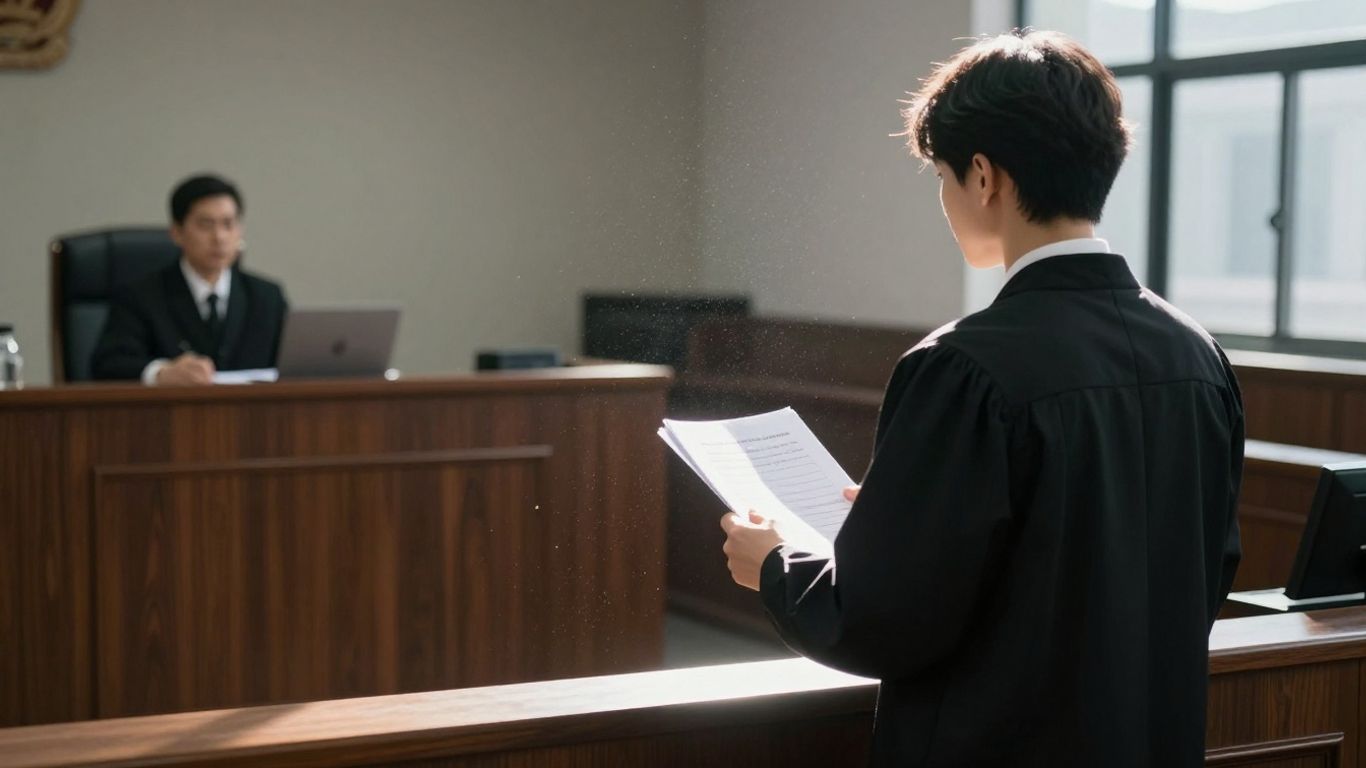
Once you are in the courtroom and your case is called, it's your turn to present your side. This is where your preparation pays off. You'll have the opportunity to explain your situation to the judge.
Organizing Your Evidence and Documentation
Before you even step into the courtroom, gather everything that supports your defense. This isn't just about having the ticket; it's about having proof. Think about what could help your case. Did you have a mechanical issue with your car? Bring repair receipts. Were you in a specific location for a valid reason? Bring documentation to show that. Your goal is to provide the judge with a clear picture of why you believe the ticket was issued in error or why leniency is warranted.
Here's a list of potential items to consider:
- Photographs: Pictures of the location, road signs, or your vehicle can be very helpful.
- Witness Statements: If someone saw what happened, a written statement or their presence in court can make a difference.
- Maintenance Records: For equipment-related violations, proof of upkeep is important.
- Receipts or Bills: If you were on your way to an appointment or had a valid reason for your actions, documentation can support your claim.
Strategies for Contesting a Ticket
If you plan to contest the ticket, you need a strategy. Simply saying "I didn't do it" is rarely enough. You need to identify weaknesses in the prosecution's case or provide a compelling alternative explanation. This might involve pointing out errors on the citation itself, such as an incorrect location or vehicle description. Sometimes, procedural mistakes by the issuing officer can lead to a dismissal. You can also explore if driving school is an option to keep points off your record.
Be aware that admitting guilt or offering lengthy explanations to the ticketing officer at the scene can be used against you later. It's often best to remain polite but brief, and save your detailed explanation for the court.
Cross-Examining the Officer
If the issuing officer is present, you may have the opportunity to ask them questions. This is called cross-examination. Your questions should be focused and aimed at highlighting inconsistencies or gaps in their account. For example, you might ask about the conditions at the time of the stop, the equipment used for measurement, or their specific observations. Avoid accusatory or argumentative questions. Stick to facts and observations. If the officer doesn't appear in court, your ticket might be dismissed, which is a common way for tickets to be dismissed.
Remember, the judge is looking for facts and a clear presentation. Being organized and respectful will serve you well in traffic court.
Common Mistakes to Avoid
Showing up to traffic court unprepared or missing your court date entirely are two of the most frequent missteps people make. These errors can significantly complicate your case, leading to harsher penalties than you might otherwise face. Understanding these pitfalls is the first step toward avoiding them.
Failing to Attend Your Court Date
Missing your scheduled court date in North Carolina has serious consequences. It typically results in a "Failure to Appear" (FTA) charge. This can lead to:
- A substantial late fee, often around $200.
- Your driver's license being suspended.
- A warrant being issued for your arrest.
You generally have a 20-day grace period to address an FTA, but acting quickly is vital. Ignoring the issue can escalate the situation, potentially leading to criminal charges, additional jail time, and increased fines. If you cannot make your court date, you must contact the court or an attorney immediately to try and reschedule or resolve the matter. Prompt action can protect your record and prevent further legal trouble.
Appearing Unprepared
Arriving in court without a clear plan or necessary documentation is another common mistake. This lack of preparation can weaken your defense, regardless of the merits of your case. Judges expect defendants to be ready to present their arguments and evidence logically.
To avoid this, make sure you:
- Review all details on your citation and understand the specific charge against you.
- Gather all relevant evidence, such as photos of the location, repair receipts, or witness statements.
- Organize your thoughts and practice what you intend to say to the judge.
A well-organized presentation, backed by solid evidence, demonstrates respect for the court and significantly improves your chances of a favorable outcome.
Proceeding Without Necessary Legal Advice
While you have the right to represent yourself in traffic court, some situations warrant legal counsel. Attempting to handle a complex case or one with potentially severe penalties without an attorney can be a significant error. An experienced North Carolina traffic attorney understands local court procedures, relevant laws, and common defense strategies. They can identify options you might miss and advocate effectively on your behalf. If you are unsure about the best course of action, consulting with a lawyer is a wise decision. You can find assistance from local legal professionals who can offer a clearer idea of whether your citation can be negotiated or dismissed.
Considering Legal Representation
Advantages of Local Legal Expertise
When you're facing a traffic ticket in North Carolina, you might wonder if hiring a lawyer is really necessary. For many, the immediate thought is to avoid the cost. However, a local attorney who knows the specific courts and judges in your area can be a significant asset. They understand the nuances of local traffic laws and how they're applied. This familiarity can lead to better strategies and potentially better outcomes than you might achieve on your own. They often have established relationships within the legal community, which can sometimes smooth the process.
When Self-Representation May Not Suffice
While it's true that some minor traffic infractions might be manageable without legal help, there are situations where going it alone is a bad idea. If your ticket involves serious charges like reckless driving, or if you have prior offenses, the stakes are much higher. A conviction could mean more than just a fine; it could lead to license suspension, increased insurance premiums, or even points on your driving record that affect you for years. For these more complex cases, professional legal advice is strongly recommended. Trying to represent yourself in these situations can leave you vulnerable to mistakes that a lawyer would easily avoid.
How an Attorney Can Help Your Case
An attorney's role goes beyond just showing up in court. They can thoroughly review your citation, identify potential weaknesses in the prosecution's case, and advise you on the best course of action. They can negotiate with the prosecutor on your behalf, potentially getting your charges reduced or dismissed. If your case goes to trial, they will present your defense effectively, cross-examine witnesses, and argue your case before the judge. Having legal representation can significantly reduce your stress and improve your chances of a favorable result, protecting your driving record and your finances. If you're dealing with a serious charge, consider consulting with a lawyer who specializes in North Carolina traffic law.
Potential Outcomes of Your Hearing
After you've presented your case or entered a plea, the judge will make a decision. The outcome can vary significantly based on the specifics of your citation, the evidence presented, and North Carolina traffic law. It's important to understand the possibilities before you even step into the courtroom.
Fines and Penalties for Guilty Verdicts
If the court finds you guilty, or if you plead guilty, you will likely face penalties. These can include:
- Fines: The amount will depend on the offense. Some fines are set by statute, while others may be determined by the judge.
- Court Costs: You may be required to pay additional fees to cover the administrative costs of the court.
- Points on Your Driving Record: Most moving violations will result in points being added to your North Carolina driver's license. Accumulating too many points can lead to license suspension.
- Increased Insurance Premiums: A guilty verdict or plea often leads to higher car insurance rates.
- Traffic School: In some cases, the judge may allow or require you to attend a defensive driving course to potentially reduce the impact on your record.
For example, a conviction for speeding 15 mph over the limit might result in a fine of around $100-$200 plus court costs, and 3 points on your license. More serious offenses, like reckless driving, carry much steeper fines and potential jail time. Understanding the specific penalties for your charge is key. If you're concerned about the financial impact, speaking with a local attorney can provide clarity on potential resolutions.
Dismissal of Charges
There are several ways your case might be dismissed:
- Insufficient Evidence: The prosecutor may not have enough evidence to prove the violation beyond a reasonable doubt.
- Officer No-Show: If the citing officer fails to appear in court, the judge may dismiss the charge, though this is not guaranteed.
- Favorable Legal Argument: Your attorney might identify a legal technicality or flaw in the citation that leads to dismissal.
- Diversion Programs: For certain offenses, you might be eligible for a diversion program. Successful completion of the program results in dismissal.
A dismissal means no fines, no points, and no conviction on your driving record for that specific charge. This is often the best possible outcome.
Options After an Unsatisfactory Verdict
If the verdict is not in your favor, you still have options. The judge will explain the penalties, and you'll have a chance to ask clarifying questions.
- Payment Plan: If you cannot afford to pay the fines and costs immediately, you can request a payment plan from the court.
- Appeal: You have the right to appeal the judge's decision to a higher court. This process is complex and usually requires legal representation. Appeals typically focus on errors of law made during the trial, not simply disagreeing with the verdict. You can find more information about the appeals process through the North Carolina court system.
- Consult an Attorney: Even after an unfavorable verdict, an attorney can advise you on the best course of action, including whether an appeal is viable or if there are other post-conviction remedies available.
It's always wise to be prepared for the possibility of a guilty verdict. Understanding the potential penalties beforehand can help you manage expectations and plan your next steps, whether that involves paying fines, seeking a payment plan, or exploring an appeal.
What happens after your hearing? It's important to know the possibilities. We can help you understand the next steps and what to expect. Visit our website to learn more about potential outcomes and how we can assist you.
Wrapping Up Your Traffic Court Experience
So, you've made it through your first North Carolina traffic court appearance. It might have seemed a bit intimidating at first, but hopefully, this guide has shown you that with the right preparation, it's a manageable process. Remember to always dress respectfully, arrive early, and bring all your necessary documents. Whether you decided to pay the fine, contest the ticket, or explore other options, understanding the steps involved is key. If you ever find yourself facing a traffic charge again, don't hesitate to seek legal advice. A local attorney can offer valuable insights and help you navigate the system more effectively, aiming for the best possible outcome for your situation.
Frequently Asked Questions
What should you wear to North Carolina traffic court?
While you don't need to wear a suit, it's best to dress respectfully. Think business casual. Avoid t-shirts with writing, ripped jeans, or hats. Looking neat and put-together shows the judge you take the matter seriously.
How early should you arrive for your traffic court hearing?
It's wise to arrive at least 15 to 30 minutes before your scheduled court time. This gives you enough time to find parking, go through security, and locate the correct courtroom without feeling rushed. Being on time makes a good impression.
What documents do you need to bring to traffic court?
You should bring your driver's license, the traffic citation you received, and any proof of insurance or vehicle registration. If you have any evidence to support your case, like photos or repair receipts, bring those too. Having everything organized is key.
Do you have to attend traffic court in North Carolina?
Generally, yes. Unlike some other states, North Carolina often requires you to appear in court for traffic tickets unless it's a minor offense that can be handled by mail. Always check your citation for specific instructions.
What happens if you don't show up for your traffic court date?
Missing your court date can lead to serious trouble. You might face additional fines, your driver's license could be suspended, or even a warrant could be issued for your arrest. It's crucial to attend or arrange for legal representation.
What are the options for pleading to a traffic ticket?
You typically have three options: plead guilty, which usually means paying a fine and accepting any consequences for your driving record; plead not guilty, which means you will have a court hearing to contest the ticket; or explore other options like traffic school if available. Consider the impact of each choice.
When should you consider getting a lawyer for a traffic ticket?
It's a good idea to consult a lawyer if your ticket involves serious charges, potential license suspension, or if you're unsure about how to proceed. A local attorney understands the specific court and can offer valuable advice and representation, potentially leading to a better outcome.
What are the possible outcomes after your traffic court hearing?
The outcome depends on your plea and the evidence presented. You might be found guilty and have to pay fines or face other penalties, or the charges could be dismissed. If found guilty, there might be options for appeals or traffic school to lessen the impact.
Charged with traffic law in NC?
Cotten Firm serves Wake, Johnston, Harnett, Chatham & Orange counties. Sign up online in minutes — we handle the court appearance so you don't have to.
Sign Up Now → Get Started